The Small Metal Decision: What Really Keeps a UK Bundle Together in Transit
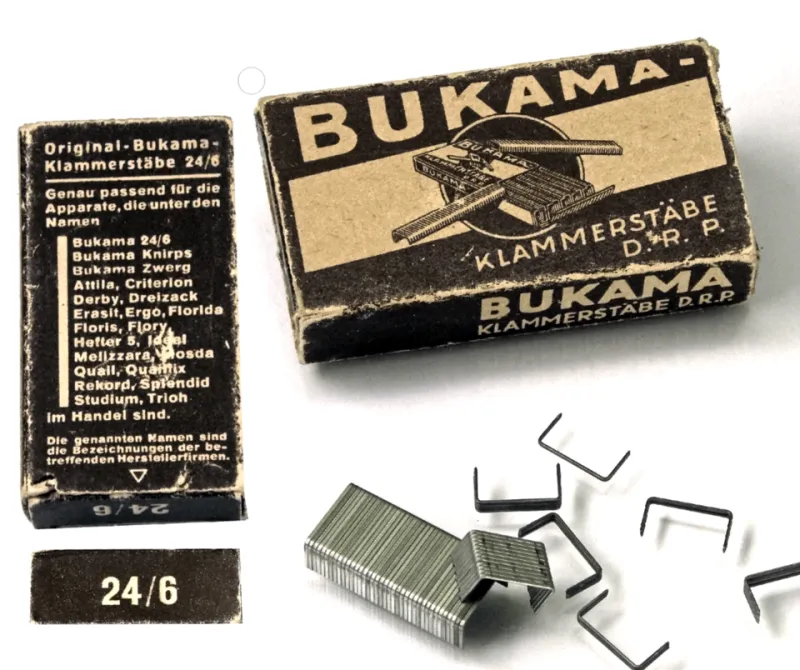
Photo: Th.Voekler, CC BY-SA 3.0, via Wikimedia Commons
A document bundle is rarely lost in one dramatic moment. More often, it fails quietly: a staple works loose, a paper clip slides, a corner fold opens, and the pages arrive in an order that no longer matches the covering letter. For UK firms sending legal copy sets, client packs and meeting papers, the fastener is not a stationery detail. It is part of the route.
The fastener is part of the route, not an afterthought
Postal sorting equipment does not read the covering letter. It moves envelopes through rollers, belts and gaps at speed. A protruding clip can catch on a guide; a bulky bulldog clip can distort an envelope; a staple that is not fully clinched can scratch or snag. The same bundle may then meet a scanner feeder, where a stray staple can jam the automatic document feeder, and a paper clip can cause a double feed. If the bundle is handed over in person, the fastener has a third job: it must survive being picked up, passed across a table and opened without marking the paper.
The right choice therefore depends on the route, not on habit. A fastener that is ideal for a temporary review set may be unsuitable for a postal bundle. A method that keeps a legal bundle secure in storage may be slow and risky in a scanner feeder. The practical answer is to match the fastener to the journey and to test it before the envelope is sealed.
Staples: strong, but only when placed with intent
Staples remain the default for many internal sets because they are fast, flat and secure. They work best when the staple is the correct leg length for the sheet count, when it is fully clinched on the reverse, and when it is placed away from the edges that sorting equipment is most likely to catch. Two staples along the left edge can reduce rotation in a thin set, but more staples also create more metal edges. A single staple in a thick set may pivot; a row of staples may make the bundle rigid in the wrong place.
For documents that will be scanned, staples are a liability unless the process includes de-stapling. Modern scanners may detect staples, but detection is not removal. If a bundle is going into an automatic feeder, the safer rule is no metal at all, or a planned de-stapling step with a clear owner. For postal movement, staples should sit flat, be fully closed and never stand proud of the paper edge.
Paper clips: useful, not reliable
Paper clips are convenient for working drafts, review copies and documents that will be separated within the hour. They are poor travellers. A clip can slide along the page, leave a pressure mark, or cluster with other clips in a post tray. In a scanner feeder, a metal clip can disturb the feed or scratch the glass. In an envelope, a clip near the edge can catch during sorting. Paper clips are best treated as temporary markers, not as a final fastening method for a bundle that must arrive in a known order.
Bulldog clips: control for handover
Bulldog clips hold bulk without piercing paper, which makes them useful for site meetings, review sets and documents that will be opened and resealed several times. They are less suitable for postal sorting because they add bulk and create hard edges. If a bulldog clip is used for hand delivery, a backing card or folded cover sheet can spread the pressure and reduce marking. Before scanning, the clip should be removed and the bundle checked for indentations that may affect image quality.
Treasury tags: the legal bundle standard
Treasury tags are familiar in legal and archival work because they hold pages securely while allowing them to be turned. They require punched holes, reinforced where possible, and a tag that is long enough to allow handling but not so long that the excess can catch. A flat knot or secure fastening is essential. Treasury tags are strong for manual review and storage, but they are not a universal answer for scanner feeders. If a tagged bundle is to be scanned, the tag should be removed or the pages fed as loose sheets according to the process.
Corner folds: a last resort
A corner fold is the lowest-cost method and the least reliable. It requires no metal and no hole, which can be useful for a quick internal handover, but it can unfold in a postal tray or during repeated handling. A folded corner also weakens the paper at exactly the point where a reader will grip it. For any bundle that will travel by post or pass through automated equipment, a corner fold should be treated as a temporary measure rather than a final fastening.
A four-step test protocol before dispatch
A simple test takes less time than a reprint. First, place the fastened bundle in its envelope or wallet and check the thickness and rigidity. The envelope should lie flat without a hard lump. Second, hold the bundle by one edge and flex it gently. Listen for movement and look for pages that shift. Third, if the bundle will be scanned, run a small sample through the same feeder model and settings. A five-sheet sample will reveal a catch point before a fifty-sheet run does. Fourth, pick the bundle up as a recipient would and open it. If the fastener marks the paper, tears the edge or requires force, it is the wrong fastener for that route.
Matching fastener to route
| Route | Suitable approach | Avoid | Practical note |
|---|---|---|---|
| Postal sorting | Flat, fully clinched staples or a securely tagged bundle inside a flat envelope | Loose paper clips, bulky bulldog clips, corner folds | Check for protrusions and keep the envelope within normal thickness |
| Scanner feeder | No metal; loose sheets or a removable fastening | Staples, paper clips, bulldog clips | De-staple before feeding and count sheets before and after |
| Manual handover | Bulldog clip with backing card or treasury tags | Weak corner folds | Protect the paper from clip pressure |
| Archive and review | Treasury tags with reinforced holes | Rust-prone or temporary clips | Check tag length and knot security |
The last look before the envelope
The final check is visual and quick. Run a thumb along the fastened edge. If anything stands proud, it can catch. Fan the bundle slightly. If pages move independently, the fastening is not doing its job. Confirm that the method matches the next step: postal sorting, scanner feed or hand delivery. A fast document service can print, collate and prepare a bundle, but the fastener decision still belongs to the sender. Choosing it with the route in mind is the difference between a bundle that arrives intact and one that arrives as a loose set of pages.