Scope Before Copies: Turning a Blanket Request into a Controlled UK Document Job

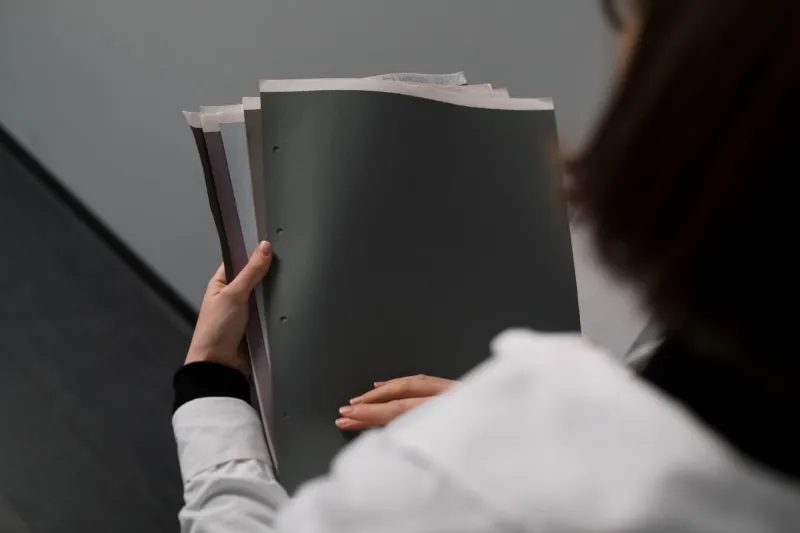
Photo: Benjamin Smith, CC BY-SA 4.0, via Wikimedia Commons
The request that sounds simple
In a UK small firm, the instruction often arrives by email or across a desk: the client or a colleague asks for 'just a copy of everything'. It is rarely simple. 'Everything' may mean every document in a matter, every email in a mailbox, every page in a storage box or every version of a contract. The phrase is an instruction without a perimeter. If accepted at face value, it can expand across copying, scanning, redaction, certification and delivery, with each stage adding cost and delay. The appropriate response is not to refuse the work but to convert the blanket request into a defined job.
Why scope discipline matters
Copying is often treated as clerical work, but document requests carry commercial and compliance consequences. Volume drives turnaround; formats drive handling; personal data drives risk; and delivery method drives what can be promised. A vague request can also create disputes later: the client expected a searchable PDF, the firm supplied paper copies; the client expected every attachment, the firm copied only final documents; or a third party's details were included because no one asked about redaction. A short intake conversation, recorded in writing, prevents most of these misunderstandings.
Step one: acknowledge, then pause
When the request arrives, confirm receipt and set a brief intake step before work begins. A useful formulation is: 'Thank you. To make sure the copy set is accurate and quoted correctly, I will confirm scope, format and handling points before we begin.' This maintains service while creating a legitimate pause. It also signals that the firm is managing the request rather than merely reacting to it.
Step two: define the perimeter
Ask questions that produce measurable answers. The following areas usually need to be settled:
- Matter or subject: which client, matter, property, project or period does the request concern?
- Date range: are there start and end dates, or should the firm copy up to a stated event?
- Custodians and locations: whose files, which office, which storage box, which shared drive?
- Document classes: correspondence, pleadings, contracts, invoices, drawings, emails, photographs or handwritten notes?
- Inclusions and exclusions: final versions only, or drafts and mark-ups as well? Attachments? Duplicates?
- Format: paper copies, scanned images, searchable PDFs, or a mixture?
- Certification: does the recipient require certified copies, and if so, certified by whom and in what form?
Do not ask all these questions as an interrogation. Group them under two or three headings and offer examples. The aim is a written scope that both sides recognise.
Step three: separate copying from scanning
Copying and scanning are different services with different risks. Paper copying preserves the appearance of an original but creates a physical set that must be collated, labelled and delivered. Scanning creates a digital file but introduces choices about resolution, colour, OCR, file naming and metadata. A client who asks for 'a copy' may need a paper set for a meeting, a searchable PDF for a portal, or both. Clarify whether the source material is paper, digital or mixed; whether staples and bindings should be removed; whether pages are double-sided; and whether fragile or oversize pages need special handling. If the request includes emails or files from a server, confirm who will export them and in what format, because a printout of an email is not the same as an exported message with attachments.
Step four: flag redaction and data protection early
Blanket requests frequently raise data-protection issues. Material may contain personal data relating to third parties, privileged advice, confidential settlement terms or information unrelated to the requester. Under UK data protection law, a controller must handle personal data fairly and lawfully, and copying everything without review can be difficult to justify. The firm should ask whether a redaction review is required, who is responsible for approving redactions, and whether the requester is entitled to the material at all. Where the request concerns a subject access request, litigation disclosure or a regulatory demand, the applicable rules and deadlines should be confirmed before copying begins. Redaction is not a purely technical step; it requires a decision record. If the firm is not instructed to redact, that assumption should be stated clearly and confirmed in writing.
Step five: quote against assumptions
A realistic quote rests on the scope record. Estimate volume in pages or files, not in vague boxes; state the assumed proportion of paper and digital material; and identify any handling that attracts additional cost, such as colour copying, oversize pages, OCR, certification, binding, courier delivery or secure destruction. Include assumptions and exclusions. For example: 'Quote assumes approximately 1,200 A4 pages, single-sided, from labelled files; excludes redaction review and certified copies.' If the volume is unknown, offer a staged approach: an initial sample or count, followed by a confirmed quote. This protects both parties and avoids the common pattern in which a low estimate becomes an uncomfortable invoice.
Step six: confirm return, retention and shredding
The final part of the script concerns custody. Will the copied set be collected, couriered or returned to the client? Will the originals be returned in their original order? Will digital files be delivered by secure link, and for how long will that link remain active? What happens to working copies, scan files and duplicative paper? If material is to be destroyed, confirm the method and whether a certificate of destruction is required. Record retention periods and responsibilities. A blanket request can too easily leave the firm holding boxes it did not agree to store or files it did not agree to keep.
A short script for the first response
A workable opening is: 'To proceed accurately, please confirm the matter, date range, locations and document types; whether you need paper copies, scanned PDFs or both; whether any redaction or certification is required; and what should happen to the originals and working copies afterwards. I will then provide a quote and a timetable based on those assumptions.'
The outcome: a controlled job
The phrase 'just a copy of everything' need not be met with either blind acceptance or bureaucratic refusal. Treated as the start of an intake process, it becomes a defined instruction with a perimeter, a format, a risk position, a price and a custody plan. For UK firms, that discipline is not an obstacle to fast service. It is what makes fast service reliable.