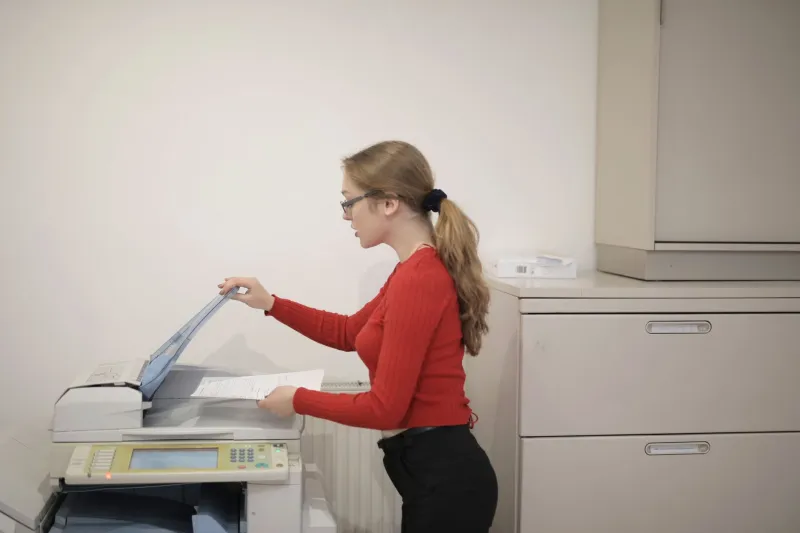
The Sheet Under Scrutiny: Matching Paper Stock to the Scanner, the Post Room and the Archive
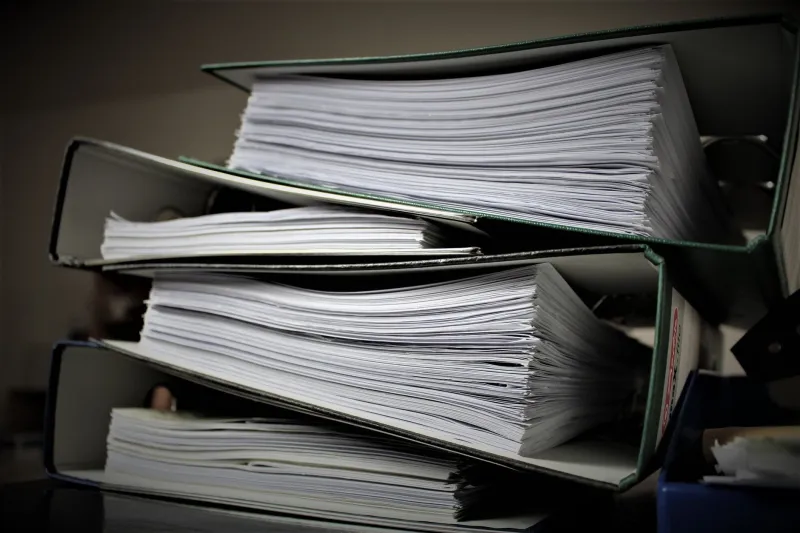
Paper is rarely neutral. A document set that looks acceptable on a desk may jam a scanner, show the reverse page through a contract, crack along a fold or push a parcel into the next Royal Mail band. For UK firms that assemble, copy, scan and post documents at speed, stock selection is therefore an operational decision rather than a matter of taste. The familiar default — a ream of 80gsm office paper — is not wrong in every case, but it is rarely the whole answer. A slightly heavier uncoated sheet often performs better across the four environments that matter: the scanner, the filing cabinet, the post room and the client handover.
Why the Default Deserves a Second Look
Most UK offices buy paper by habit. The lowest-cost 80gsm ream is ordered in bulk, loaded into every machine and used for everything from internal notes to client packs. The difficulty arises when that same sheet is asked to carry dense double-sided print, survive repeated handling and feed through an automatic document feeder without curling. Paper weight, finish and fibre composition affect each of these outcomes. The aim is not to specify the most expensive stock available, but to match the sheet to the job.
Three variables do most of the work. Grammage, expressed in gsm, indicates mass per square metre and therefore stiffness and opacity. Finish determines how toner or ink sits on the surface and how the sheet folds. Certification, such as acid-free or ISO 9706 status, indicates whether the paper is likely to endure in an archive. A fourth variable — storage conditions — is often overlooked. Paper stored in a humid corner or a cold warehouse will curl, regardless of its specification.
Scanner Feed Reliability
Automatic document feeders are less tolerant than they appear. Very light sheets, particularly recycled stocks with uneven formation, tend to curl at the leading edge and pick up two pages at once. Heavier sheets above roughly 160gsm may need a flatbed or a dedicated feed path. Coated gloss papers can slip or deposit a fine dust on rollers.
For routine scanning of multi-page document sets, an uncoated 90gsm or 100gsm sheet usually offers the best compromise between stiffness and flexibility. It feeds cleanly, resists curling after printing and remains suitable for duplex scanning. Firms scanning large volumes should test a full ream rather than a single sheet, because batch variation matters.
Show-Through and Duplex Printing
Show-through is the visible ghost of the reverse page. It becomes a practical problem when both sides of a contract, court bundle or tender response carry dense text or shaded tables. An 80gsm sheet may be adequate for light text, but heavy toner coverage can make the reverse side distracting. Moving to 90gsm improves opacity; 100gsm or 120gsm is safer for double-sided legal sets that will be read closely.
Coated stocks can reduce show-through, but they introduce other risks. Gloss or silk surfaces may crack when folded, particularly along a spine or a tri-fold. They can also slow ink drying if the wrong print technology is used. For fast turnaround work, uncoated paper is generally the more predictable choice.
Ink Drying and Toner Adhesion
Laser printers fuse toner to the sheet under heat. On uncoated 90gsm to 120gsm stock, adhesion is usually reliable and sheets can be handled soon after output. On heavily coated papers, toner may sit on the surface and rub or flake under firm handling. Inkjet devices behave differently: uncoated paper can allow ink to feather, while coated inkjet papers are formulated to absorb ink quickly without bleeding.
For document sets that must be scanned immediately after printing, avoid stocks that remain tacky or require extended drying. A simple test is to print a dense page, wait a short interval, then run a finger across the image. If the print smears under ordinary pressure, the stock and device combination is unsuitable for same-day work.
Folding and Binding
Folding behaviour changes with weight. Sheets between 80gsm and 100gsm fold easily by hand or machine. A 120gsm sheet folds well but benefits from a bone folder for a crisp edge. Above roughly 160gsm, scoring is advisable to prevent cracking along the fold. Booklet covers in the 200gsm to 250gsm range are common, but they should not be expected to feed through a standard office scanner without manual assistance.
Binding choice interacts with paper choice. Saddle-stitched booklets need an inner stock that folds without springing open. Perfect-bound or thermal-bound documents need sufficient stiffness to turn cleanly. Coil and comb bindings tolerate a range of weights but can tear lighter sheets at the punched edge if the document is handled roughly.
Postage Weight
Paper weight translates directly into postage cost. A single A4 sheet at 90gsm weighs approximately 5.6g; at 100gsm it is about 6.2g; at 120gsm it is roughly 7.5g. A twenty-sheet document set therefore moves from about 112g at 90gsm to around 150g at 120gsm before the envelope is added. That difference can push a parcel out of a large-letter band and into a small-parcel rate.
For documents that are posted frequently, 90gsm is often the better economic choice than 100gsm or 120gsm, provided that opacity remains acceptable. Reserve heavier stock for covers, signature pages or hand-delivered sets where presentation justifies the additional weight.
Archive Life
Long-term retention depends on more than thickness. Acid-free paper with an ISO 9706 declaration is designed to resist yellowing and embrittlement. An 80gsm acid-free sheet may outlast a 120gsm stock of unknown provenance. Coated papers can block or stick together in warm storage, and some recycled stocks contain residues that affect ageing. For documents that must remain readable for decades, specify the standard rather than the weight alone.
A Decision Matrix
| Requirement | Recommended stock | Avoid |
|---|---|---|
| High-volume scanning through an ADF | 90gsm to 100gsm uncoated | Very light recycled stocks that curl; coated gloss |
| Double-sided legal or contract sets | 100gsm to 120gsm uncoated | 80gsm with heavy toner coverage |
| Client handover with a formal feel | 120gsm to 160gsm uncoated or silk | 250gsm stock that needs flatbed scanning |
| Post-room economy for multi-page sets | 90gsm uncoated | 120gsm or heavier throughout |
| Long-term archive | 90gsm to 100gsm acid-free, ISO 9706 | Unknown recycled stock; gloss coatings |
| Folded booklets | 120gsm text; 200gsm to 250gsm scored cover | 160gsm or heavier without scoring |
A Practical Default for UK Firms
For general document sets that must print, scan, file and post, 90gsm uncoated paper is a sound default. It is stiff enough to feed reliably, opaque enough for most duplex work and light enough to keep postage predictable. Use 100gsm or 120gsm where double-sided density demands it, and reserve 160gsm and above for covers and handover pieces. Keep a small stock of acid-free paper for documents with a long retention requirement.
None of this replaces a trial. Paper varies between manufacturers and batches, and office humidity can alter behaviour within a single ream. Print a representative document, scan it through the actual feeder, fold it as it will be folded and weigh the finished set. The correct sheet is the one that survives that sequence without complaint.