One Page Late: Controlled Replacement in Completed UK Document Sets

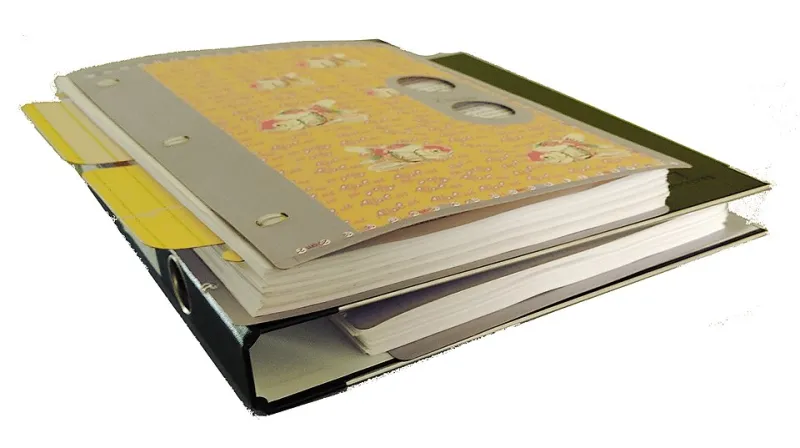
Photo: Alan Murray-Rust , CC BY-SA 2.0, via Wikimedia Commons
A late amendment is rarely welcome, but it is rarely unexpected. A signatory changes, a date is corrected, a schedule is superseded, or a reference is updated after the bundle has been printed, bound and indexed. The instinct to reprint everything is understandable, yet it can waste time, stock and attention. The greater risk, however, is an uncontrolled swap that leaves different recipients holding different versions of the same set.
The controlled replacement of one page is therefore not a shortcut. It is a small document-management operation in its own right. It requires a clear view of every affected copy, a physical match to the original sheet, a discreet but traceable marker, and a record that survives the next audit.
Start with the distribution ledger, not the printer
Before any replacement sheet is produced, establish where the finished bundle has travelled. The office master copy is only one copy. There may be a file copy, a client set, a counsel set, a court or tribunal copy, a site copy, and a scanned PDF already circulating by email. Each one needs a decision.
Use the distribution record created when the bundle was issued. If no such record exists, reconstruct one before proceeding: recipient, date, format, copy number where applicable, and whether the copy is controlled or uncontrolled. A controlled copy can be recalled, replaced and logged. An uncontrolled copy — a PDF forwarded without restriction, for example — is harder to withdraw. In that case, a whole-set reissue with a clear version label may be the only honest option.
Decide whether the set can tolerate a swap
A single-page replacement is generally safe only when the amendment does not disturb the architecture of the bundle. The replacement should carry the same page number, sit within the same section, and leave the contents page, index and tab sequence substantially unchanged. If the amendment alters pagination, adds a new schedule, changes a cross-reference used elsewhere, or requires a new tab, the set is no longer a like-for-like replacement.
Binding matters too. A page in a comb-bound or ring-bound set can often be exchanged with little disruption. A page in a perfect-bound or stitched set may not survive removal without damage. In that case, a printed insertion slip or a reissued section may be more presentable than a visibly repaired spine.
There are also regulatory and client expectations to consider. Court bundles, tender packs and statutory submissions may have their own rules on amendments. Where the receiving body requires a complete, consistent set, do not improvise. Reissue the set and label it clearly.
Match the sheet, not just the words
The replacement page should look as though it belonged in the original run. Match the paper stock by weight, shade and finish. A bright white sheet in an off-white bundle is conspicuous; a heavier sheet can distort the binding; a different coating can change the way toner sits on the page.
Use the same print settings wherever possible: duplex or simplex, margins, header and footer position, font embedding, and colour profile. If the original was printed on a particular office device, test one sheet before producing the full replacement run. Check that the page number aligns with its neighbours and that any rules, boxes or tab marks fall in the same place.
For scanned or digital sets, the discipline is similar. Replace the page in the source file, regenerate the searchable text layer if necessary, and confirm that bookmarks and internal links still point to the right place. A replacement page that is visually correct but unsearchable is only half a replacement.
Mark the change without defacing the page
A replacement should be traceable without drawing the reader’s eye away from the content. The cleanest approach is a small printed version indicator in the footer or in a designated document-control area: for example, a revision code and the date of replacement. Avoid handwritten annotations on the face of the page unless the practice’s convention expressly allows them.
For paper sets, a brief cover note or insertion slip can explain that one page has been replaced and identify the page number. For bound sets where a slip would be awkward, a note in the custody record and a discreet footer marker may be sufficient. The aim is consistency: every recipient should be able to tell, without searching, that the page in hand is the current one.
Repair the finding aids
A replacement page is not complete until the tools that help a reader navigate the bundle have been checked. Update the contents page if a title or description has changed. Check the index for page references. Confirm that tabs still correspond to the correct sections. If the bundle carries a barcode or cover sheet, ensure that the identifier still points to the correct version.
Digital copies deserve the same attention. Replace the page in the PDF, re-run optical character recognition where needed, and inspect the document at normal reading size. Confirm that the new page appears in the correct position and that no duplicate or blank page has been introduced.
Record the replacement in custody terms
The custody record should show what changed, when, why, and on whose authority. Record the page number, the reason for replacement, the person who approved it, and the copies updated. If old pages are retained, note where they are held. If they are destroyed, record the destruction. If recipients are asked to destroy superseded pages, ask for confirmation.
This need not be elaborate. A single-line entry in the document log is often enough, provided it is made at the time and not reconstructed later. The point is to prevent a future reader from finding two versions and having no way to tell which one is authoritative.
Know when to reissue the whole set
A full reissue is the better choice when the change affects more than one page, when pagination shifts, when the binding cannot be repaired cleanly, when several uncontrolled copies are in circulation, or when the recipient expects a complete and uniform set. It is also the safer choice when the amendment touches a signature page, a certification, or any part of the document that carries legal weight.
Reissuing is not an admission of failure. It is a controlled response to a change that the original set can no longer represent accurately. A bundle is, in effect, a promise that every copy tells the same story. A single-page swap should uphold that promise; if it cannot, the whole set should be replaced.
For firms working to tight deadlines, the practical answer is often to prepare the replacement sheet in advance, confirm the stock and print settings, and keep the custody entry ready. Fast Documents UK’s approach is to treat the late page as a document-control event, not a rushed errand — because the page itself is easy to print, but the confidence of the recipient is harder to replace.