Certified, Collated and Signed For: Legal Copy Sets That Pass Scrutiny First Time
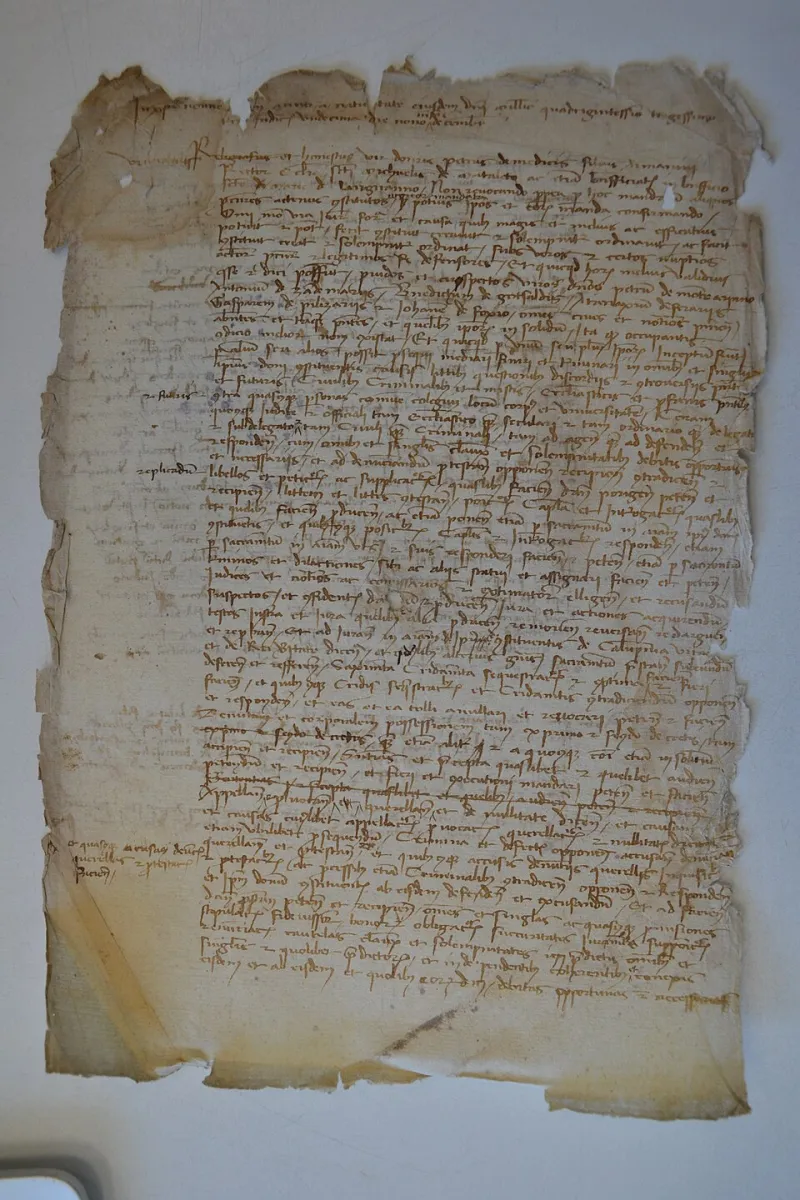
Photo: Thomas Demaldé, CC BY-SA 4.0, via Wikimedia Commons
A reprint is rarely the expensive part
When a legal copy set is rejected, the printing cost is trivial beside everything else. There is the fee earner's afternoon spent re-collating, the signing appointment that has to be rearranged, the registry or court office that will not accept a corrected version until the following week, and the quiet damage done to a client's confidence. Legal copying rewards preparation because the margin for a second attempt is so narrow.
Three terms that are not interchangeable
Much confusion begins with vocabulary, and it is worth fixing before an order is placed.
A simple copy is a reproduction made for working purposes — a spare set for the file, a copy for counsel, a duplicate for a colleague. No certification is involved and no particular form is required beyond legibility.
A certified copy, or certified true copy, is a copy bearing a statement signed by an authorised person — typically a solicitor, notary or commissioner for oaths — confirming that it matches the original document. The certification is a legal act performed by that individual. A print bureau cannot certify anything; its role is to produce a copy of sufficient quality and correct pagination for the certification to be applied without argument.
A true copy in conveyancing and registry practice often means a complete, unaltered reproduction of the whole instrument, including seals, plans, endorsements and manuscript amendments. Completeness matters more than presentation. A beautifully bound set that omits the reverse of a plan page is not a true copy of anything.
Where a document is destined for a court, a probate registry, HM Land Registry or a counterpart in a property transaction, establish at the outset which of these descriptions applies and who will be signing.
Where small firms typically come unstuck
Probate and estate files. Wills, oaths, accounts and correspondence are assembled into sets that may be examined line by line. Printer cover sheets, watermarks reading draft, staple marks across text and inconsistent orientation all attract attention. So does binding that conceals an endorsement written along a margin.
Litigation bundles. Practice directions and individual courts impose their own expectations on indexing, pagination and tabbing. The bundle's page numbers must correspond exactly to the index. A binder should never invent numbering; if numbering is to be applied during production, the sequence must be agreed in writing and checked against the index before binding.
Property files. Leases, transfers, planning permissions, searches and EPCs frequently carry coloured plans, red seals and stamps in faded ink. Converted to greyscale, a plan showing two boundary lines in different colours becomes a single ambiguous line — and the copy no longer does its job.
Pagination, orientation and the point of no return
Numbering seems administrative until it is wrong. Decide early whether existing page numbers are to be retained or a fresh stamped sequence applied, and whether blank pages count. Confirm that scanned pages in landscape will be rotated consistently rather than left for the reader to turn sideways. Confirm where index tabs fall, because a tab inserted at the wrong leaf breaks the correspondence between index and content.
Once a set is punched and bound, corrections become expensive. Proofing should happen flat, before the binder, on the sequence that will actually be bound.
Colour fidelity and the seal problem
Deeds, certificates and older instruments carry information in colour: seals, ribbons, stamps, manuscript annotations in blue or red, and shaded areas on plans. Specify colour output by page range rather than as a blanket instruction, and ask for a proof of any page where the colour carries legal meaning. The saving from mono printing is rarely worth the risk on a set that may be scrutinised years later.
Originals, custody and secure handover
Originals should never leave the custody of the firm instructing the work. Send copies of originals, or high-resolution scans, and retain the master file. For the finished set, agree the chain of custody in writing: who receives it, whether signature is required, whether it may be left with a reception desk, and how any spoilt sheets or proofs will be returned or destroyed. Where the material is sensitive — medical evidence, family proceedings, personnel records — encrypted transfer and named-recipient delivery should be the default rather than an upgrade.
Pre-flight checklist before the order goes in
- Confirm whether the set requires certification, notarisation or no certification at all.
- Identify who will sign and where the signature block is to appear.
- Verify page count against the index, and confirm whether blank pages are included.
- List colour pages by range; flag seals, plans and manuscript amendments.
- Confirm duplex or single-sided, and paper weight.
- Agree pagination method: retained, renumbered or stamped.
- Fix tab positions and confirm the divider stock.
- Approve a flat proof before binding on any set over a hundred pages.
- Specify binding type and whether the set must lie flat or open fully.
- Record delivery instructions, named recipient and destruction arrangements.
Questions worth putting to a document partner
- Can you work from an encrypted upload, and how long are files retained?
- Do you proof before binding, and will you supply a flat set for checking?
- How do you handle mixed orientation and fold-out plans?
- Can colour pages be printed selectively by range without affecting the rest?
- What is your process for reprints if a pagination error is found after binding?
- Will spoilt copies and proofs be shredded, and can you confirm that in writing?
The standard to aim for is a set that raises no questions at handover — one where the index matches, the seals are visible, the binding opens flat and the recipient signs for it without hesitation. Achieving that is largely a matter of asking the right questions before the first sheet is printed.